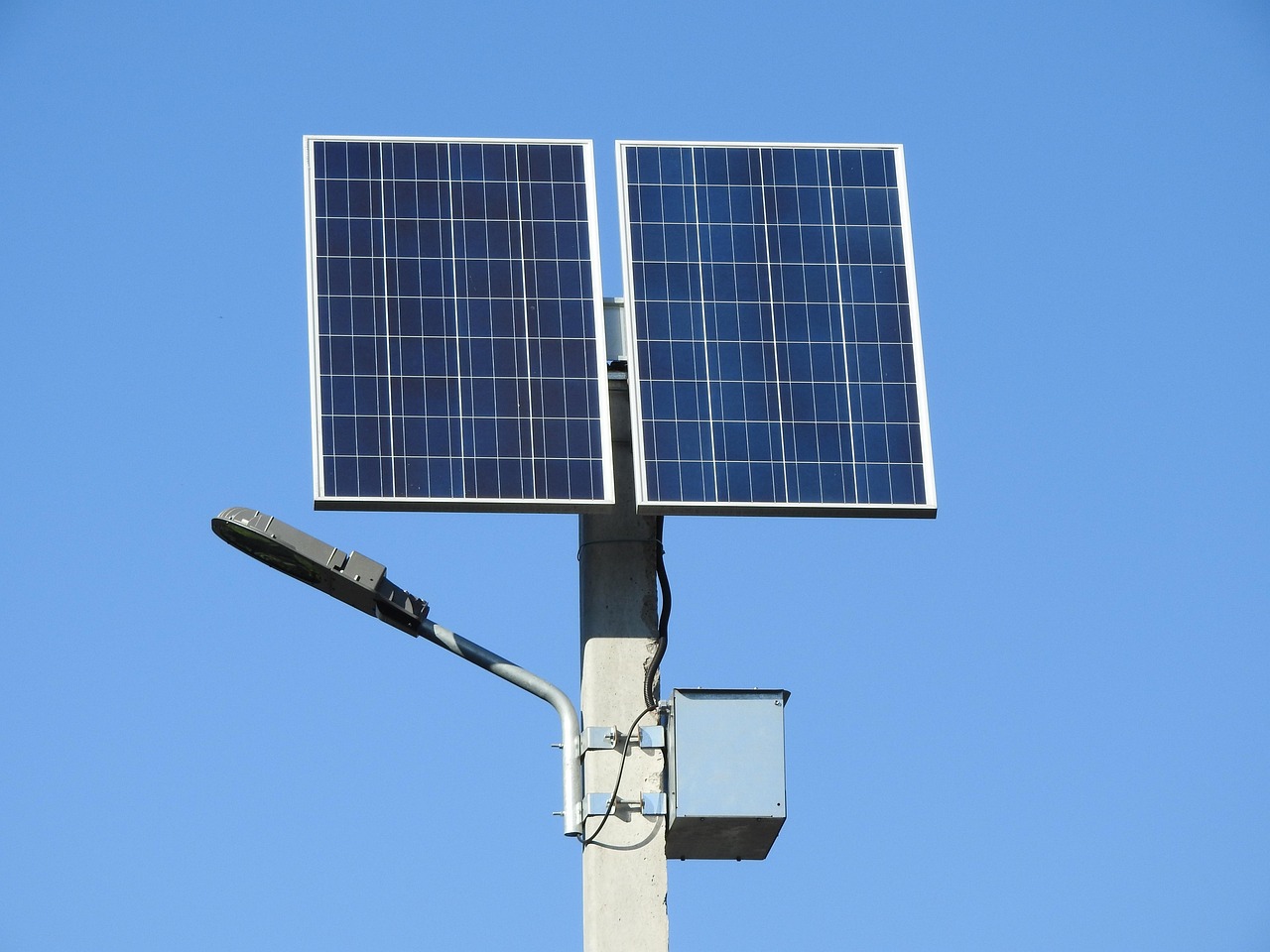
Photo from Pixabay (free license)
Battery Energy Storage Fire Safety: What NFPA 855 (2026) Changes and Why Building Owners Need to Act Now
The 2026 edition of NFPA 855 introduces mandatory hazard analyses, expanded battery chemistry coverage, and annual emergency planning requirements for stationary energy storage systems. With 87 utility-scale BESS failures globally and no proven way to extinguish lithium-ion battery fires, the updated standard shifts fire safety strategy from suppression to containment and exposure protection.
Battery energy storage systems (BESS) are being installed at record pace across the United States, with global grid-scale capacity reaching 11.9 GW in 2024 and over 1 TWh of new installations projected through 2025. But a string of high-profile fires — including a January 2025 blaze at the Moss Landing facility in California that forced the evacuation of 1,200 residents — has pushed regulators to tighten fire safety rules. The 2026 edition of NFPA 855 (Standard for the Installation of Stationary Energy Storage Systems) delivers the most comprehensive safety overhaul yet for these systems.
Key Takeaways
- The 2026 edition of NFPA 855 expands coverage to more battery chemistries, requires formal hazard mitigation analyses, and mandates annual emergency operations plan reviews with first responder training
- Approximately 87 utility-scale BESS failures have occurred globally since 2012 — roughly one per month — though failure rates per gigawatt deployed have dropped by over 98% in six years
- There are currently no proven methods to extinguish lithium-ion battery fires; NFPA 855 focuses on containment, exposure protection, and controlled burn strategies rather than traditional suppression
- Building owners installing solar+battery systems should verify their local jurisdiction NFPA 855 adoption status and coordinate emergency response plans with their fire department before installation
Why Battery Storage Fire Safety Is Different
Unlike conventional building fires, battery energy storage fires involve thermal runaway — a self-heating chemical reaction inside battery cells that releases flammable gases and can propagate to adjacent cells through conductive and convective heating. This cascade can occur without oxygen or visible flames, making detection and suppression extraordinarily difficult.
According to the U.S. EPA, lithium battery fires are extremely difficult to extinguish and may reignite hours or days later. Battery fires also release harmful gases — including hydrogen fluoride, carbon monoxide, and hydrogen — posing serious health risks to nearby residents and first responders. The EPA recommends isolation zones of at least 330 feet for commercial BESS installations.
For building owners with fire alarm systems, this creates a unique challenge: standard smoke and heat detectors may not provide adequate early warning for thermal runaway events, which can develop inside sealed battery enclosures before producing visible signs.
What NFPA 855 (2026 Edition) Changes
The 2026 update to NFPA 855 addresses several gaps identified after real-world incidents. Here are the key changes:
Expanded Battery Chemistry Coverage
Previous editions focused primarily on lithium-ion systems. The 2026 edition broadens scope to cover a wider range of battery technologies now entering the market, including iron-air, sodium-ion, and zinc-based chemistries — each with distinct fire risk profiles.
Mandatory Hazard Mitigation Analysis
The updated standard introduces formal hazard analyses as a requirement, not a recommendation. Installations must document specific fire, explosion, and toxic gas risks for their battery chemistry, configuration, and site conditions before receiving approval.
Strengthened Emergency Planning and Training
NFPA 855 (2026) now requires:
- Annual review of the emergency operations plan
- Annual refresher training for facility personnel
- Notification to local emergency responders of training dates and locations
- Coordination with local fire departments on response protocols, including guidance that fire crews may need to let battery fires burn themselves out while protecting surrounding exposures
Aligned Fire and Explosion Testing
The 2026 edition aligns fire and explosion testing requirements with UL 9540A, the industry benchmark for evaluating thermal runaway fire propagation in energy storage systems. This ensures that systems installed in buildings have been tested under realistic failure scenarios.
The Incident That Changed Everything: Moss Landing
On January 16, 2025, a massive fire broke out at the Moss Landing BESS facility in Monterey County, California — one of the largest battery storage sites in the world. The fire triggered a 24-hour evacuation of approximately 1,200 nearby residents due to toxic smoke concerns. Firefighters were unable to extinguish the battery fire directly and instead focused on preventing it from spreading to adjacent systems.
The Moss Landing incident underscored a critical reality the International Fire and Safety Journal has highlighted: there are no proven fire suppression methods to extinguish li-ion battery fires. Instead, current best practice relies on separation distances between battery cabinets, deflagration venting per NFPA 68, and exposure cooling — essentially managing the fire rather than putting it out.
What Building Owners Should Do Now
If your building has or is planning a battery energy storage system — whether paired with rooftop solar, used for demand charge management, or installed as backup power — here is how to prepare:
- Check your jurisdiction code adoption: Use our compliance lookup tool to determine which edition of NFPA 855 your local authority having jurisdiction enforces. Some cities in California, New York, and Texas are already enforcing stricter local requirements.
- Install appropriate detection: Standard fire detection systems may not catch thermal runaway early enough. Consider infrared sensors, thermal monitoring, and gas detection systems specifically designed for battery enclosures.
- Develop an emergency plan: Work with your local fire department and fire protection provider to create a BESS-specific emergency response plan. First responders need to know what battery chemistry is installed and where isolation disconnects are located.
- Maintain separation distances: Ensure your installation meets required spacing between battery units, building walls, and property lines. These distances are your primary fire containment strategy.
The rapid growth of battery energy storage is essential for the clean energy transition — but it must be matched by equally rigorous fire safety standards. The 2026 edition of NFPA 855 is a significant step forward. Connect with a fire protection professional in your area to ensure your BESS installation meets the latest requirements.
Sources
Need fire protection services?
Find licensed companies near you and get free quotes.