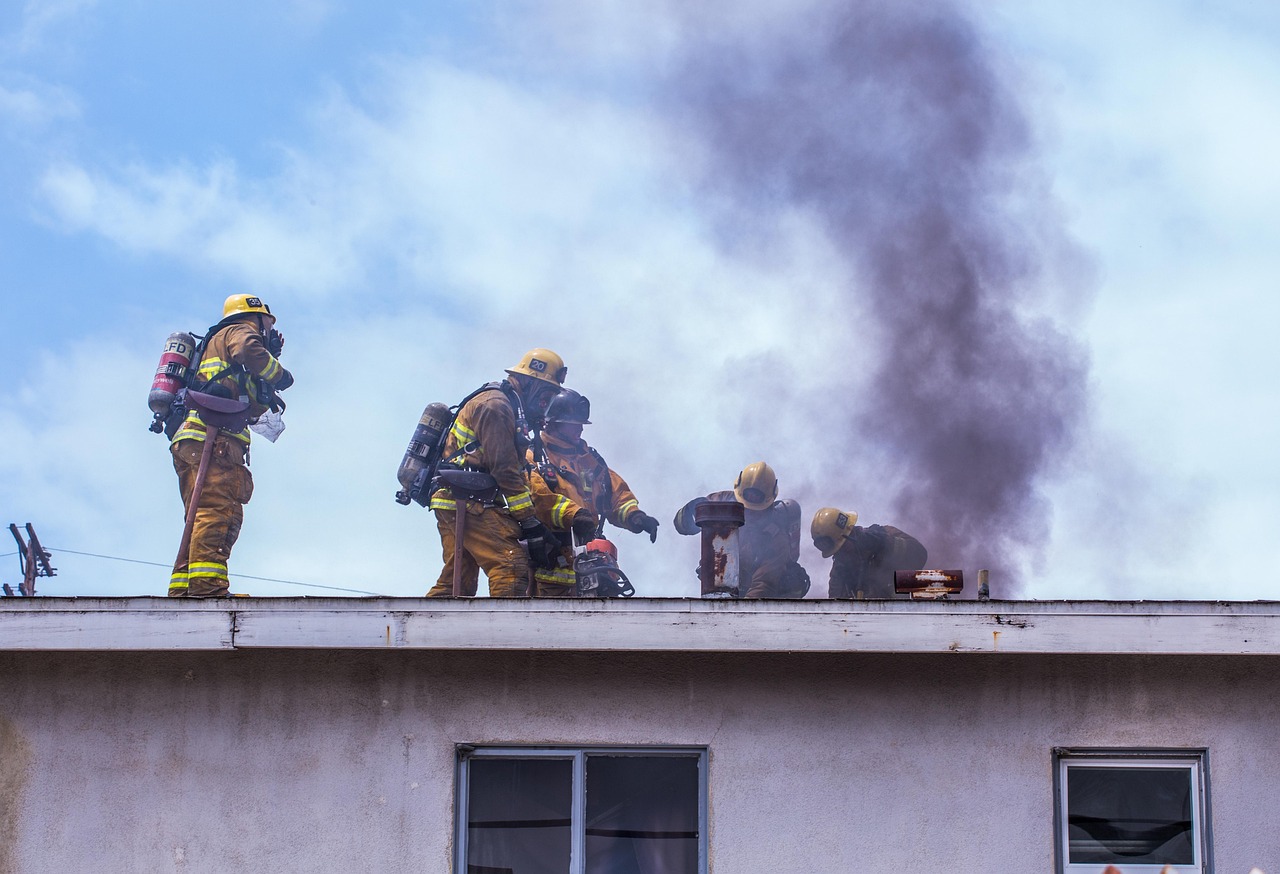
Photo from Pixabay (free license)
Fire Protection and Insurance in 2026: How California's New Laws Are Changing Coverage Rules for Building Owners Nationwide
California's 2026 insurance laws require building code upgrade coverage and will prohibit insurers from refusing fire-safe homes by 2028. For commercial building owners nationwide, maintaining documented fire protection compliance is now directly tied to insurance premiums, coverage terms, and claim outcomes.
Key Takeaways
- California's new 2026 insurance laws require residential replacement cost policies to include building code upgrade coverage of at least 10% of the dwelling limit — covering fire-resistant construction upgrades when rebuilding.
- The Insurance Coverage for Fire-Safe Homes Act (SB 1076) will prohibit insurers from refusing coverage to homes meeting state fire hardening and defensible space standards, effective January 1, 2028.
- For commercial building owners nationwide, maintaining documented fire protection compliance (sprinkler inspections, alarm testing) is increasingly critical for insurance coverage — non-compliant buildings face premium increases of 15-30% or outright policy cancellation.
California Leads a National Shift
After devastating wildfire seasons and a mass exodus of insurance companies from the state, California is rewriting the rules of fire insurance in 2026. According to KQED, several new laws taking effect this year fundamentally change how insurers must treat fire-safe properties — and the implications extend far beyond California.
Starting July 1, 2026, all residential replacement cost policies must include building code upgrade coverage equal to at least 10% of the dwelling limit. This means if your home is destroyed and rebuilt, your insurance must cover the cost of complying with current fire codes — including modern fire sprinkler systems and fire alarm installations that weren't required when the original building was constructed.
The Fire-Safe Home Incentive
Senate Bill 1076, the Insurance Coverage for Fire-Safe Homes Act, creates a powerful incentive for property owners to invest in fire protection. The law will require insurance companies to offer coverage to homeowners who meet state-defined fire hardening and defensible space standards. By January 1, 2028, insurers will be prohibited from refusing to sell or renew a policy for homes that meet these standards.
For building owners in Los Angeles, San Francisco, and fire-prone areas throughout California, this creates a clear financial pathway: invest in fire protection upgrades → qualify for guaranteed insurance coverage.
Commercial Buildings: The Insurance-Compliance Connection
The California model is accelerating a national trend that commercial building owners everywhere need to understand: fire protection compliance directly affects your insurance.
As AssuredPartners reports, commercial property insurers are increasingly tying coverage decisions to verifiable fire protection compliance. Buildings with documented, up-to-date NFPA 25 sprinkler inspections, NFPA 72 alarm testing, and NFPA 10 extinguisher maintenance receive preferential treatment on premiums and coverage terms.
Conversely, buildings without current inspection documentation face:
- Premium increases of 15-30% compared to compliant properties
- Higher deductibles for fire-related claims
- Coverage exclusions for fire damage in non-compliant areas of the building
- Policy non-renewal after claims if compliance gaps are discovered
The Business Protection Act
California's SB 547, the Business Insurance Protection Act, extends post-fire protections previously available only to homeowners. Now, businesses, HOAs, condominiums, affordable housing units, and nonprofits receive a one-year prohibition on insurance non-renewals after a fire event — giving them time to rebuild and restore fire protection systems without losing coverage.
What Building Owners Should Do
- Audit your fire protection documentation — Can you prove your systems are inspected and maintained per NFPA standards? If not, start now
- Ask your insurer about compliance credits — Many carriers offer 5-15% premium discounts for buildings with verified fire protection programs
- Check your policy's fire protection requirements — Some policies have specific sprinkler and alarm maintenance clauses that void coverage if not met
- Use our Compliance Lookup Tool to verify your jurisdiction's requirements
- Get free quotes from licensed fire protection companies to ensure your systems are inspection-ready
Need fire protection services?
Find licensed companies near you and get free quotes.