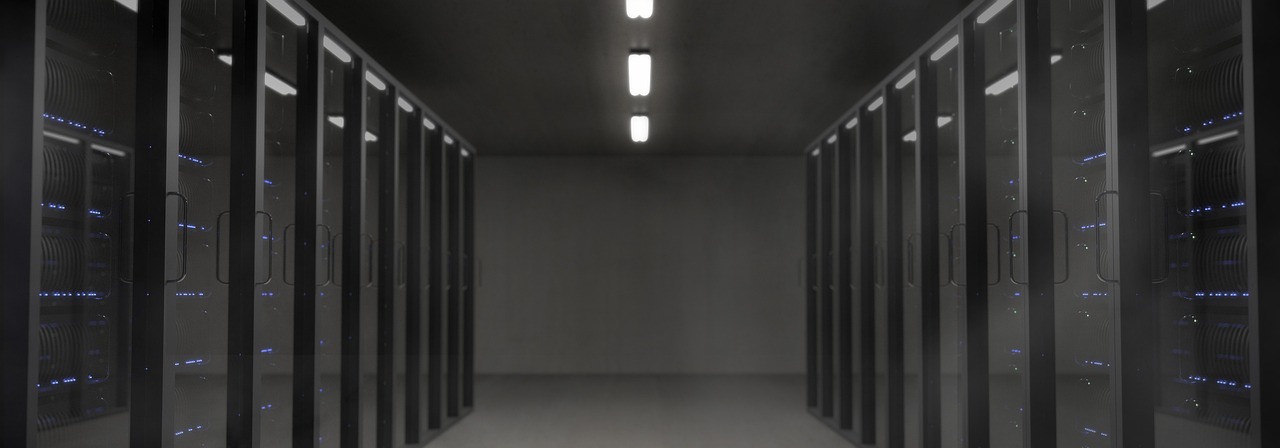
Photo from Pixabay (free license)
The AI Data Center Boom Is Reshaping Fire Protection: Inside the NFPA 75 Stack Every Hyperscale Facility Now Needs
AI workloads are pushing data center rack densities and fire risk to levels conventional sprinkler systems cannot safely handle. Hyperscale operators are now layering aspirating smoke detection, pre-action sprinklers, and clean agent suppression — while phasing out FM-200 ahead of the 2036 AIM Act deadline.
The United States is now home to 5,381 data centers, with Northern Virginia alone operating more than 13 million square feet of capacity that handles an estimated 70% of the world's daily internet traffic. AI workloads are pushing that footprint higher every quarter — and rewriting the fire protection rulebook in the process. Higher rack densities, lithium-ion backup batteries, and zero tolerance for downtime are forcing operators to combine pre-action sprinklers, clean agent suppression, and aspirating smoke detection in ways that traditional commercial buildings never had to.
Key Takeaways
- U.S. data center construction is accelerating to meet AI compute demand, but high-density GPU racks generate extreme thermal loads and electrical fault risk that conventional sprinkler-only protection cannot safely address
- NFPA 75 (IT equipment) and NFPA 76 (telecommunications) are the two governing standards — most hyperscale facilities now layer aspirating smoke detection (VESDA), pre-action sprinklers, and clean agent suppression (FK-5-1-12 / Novec 1230) into a single defense-in-depth stack
- FM-200 (HFC-227ea) is being phased down through 2036 under the federal AIM Act, pushing new builds toward FK-5-1-12 or inert gas systems (nitrogen, argon) that face no regulatory sunset
- Lithium-ion UPS batteries cannot be extinguished once thermal runaway begins — operators must design for early detection and compartmentalization, not suppression after the fact
- Downtime from a single fire incident can cost hundreds of thousands to millions of dollars in SLA penalties, data loss, and customer churn — making fire protection an availability investment, not just a code requirement
Why AI Workloads Changed the Fire Risk Calculus
A traditional enterprise data center might run racks at 5–10 kW each. AI training facilities packed with NVIDIA H100 and Blackwell GPUs are pushing rack densities to 50–100 kW and beyond. That density translates directly into more amperage being distributed through the same cabling, more ambient heat building up around server intakes, and more thermal stress on every electrical component in the cabinet.
According to fire protection engineers tracking the AI buildout, the combination of always-on operations, dense electrical loads, and zero tolerance for downtime windows means even minor faults that would self-correct in a typical office building can cascade into ignition events in an AI hall. Water damage from a discharged sprinkler is itself treated as a secondary threat comparable to fire, given how quickly soaked GPUs and cabling can take an entire row offline.
The Three-Layer Detection and Suppression Stack
Modern hyperscale facilities are converging on a three-layer approach that goes well beyond the wet-pipe sprinkler systems found in conventional commercial buildings:
1. Aspirating smoke detection (VESDA). Very Early Smoke Detection Apparatus systems continuously sample air through a network of pipes, detecting microscopic combustion particles long before visible smoke would trigger a conventional spot detector. This early warning is what makes the rest of the stack possible. NFPA 72 governs the inspection and testing requirements for these networked detection systems.
2. Pre-action sprinkler systems. Unlike wet-pipe systems where water sits in the pipes year-round, pre-action systems keep piping dry until both a detection event and a sprinkler activation occur. Nitrogen generators are increasingly used to mitigate corrosion in the dry piping. The result: a sprinkler will not discharge accidentally just because someone bumps a head with a server cart. Pre-action systems still fall under NFPA 25 for inspection, testing, and maintenance, and need an annual sprinkler inspection like any other water-based system.
3. Clean agent suppression. Inside the white space, FK-5-1-12 (Novec 1230) or inert gas systems can knock down an incipient fire without leaving residue. Industry guidance from Johnson Controls notes that clean agent systems enable "faster reinstatement" after a discharge — critical when every minute of downtime carries SLA penalties.
FM-200 Is Going Away. Here Is What Replaces It
FM-200 (HFC-227ea) has been the workhorse clean agent in data centers for two decades, but its high global warming potential put it on the federal phasedown list. Under the AIM Act, FM-200 production and import will be progressively restricted through 2036, making it harder and more expensive to recharge existing systems.
Two replacements are taking over new installations:
- FK-5-1-12 (Novec 1230): A fluorinated ketone with low global warming potential and zero ozone depletion. Now the default specification for most new data center clean agent systems.
- Inert gas systems (nitrogen, argon, IG-541 blends): Reduce oxygen below combustion thresholds without displacing breathable air. No regulatory phasedown risk — but they require more storage cylinders and higher ceiling heights.
Operators with existing FM-200 systems do not need to rip and replace immediately, but every multi-year fire protection plan should now include a transition strategy.
Lithium-Ion Batteries: The Risk No Suppression System Can Solve
The other shift quietly reshaping data center fire protection sits in the UPS room. Backup power has migrated from VRLA (lead-acid) batteries to lithium-ion at most new builds, since lithium-ion offers higher energy density, longer lifespan, and a smaller footprint. The trade-off: thermal runaway. Once a lithium-ion cell enters thermal runaway, the chemistry is self-sustaining — there is no agent that "extinguishes" it the way water knocks down a wood fire.
The International Association of Fire Fighters notes that backup systems in modern facilities can contain "thousands or even millions of lithium-ion batteries that can become explosive if they malfunction." The 2021 OVHcloud fire in Strasbourg, France — still the worst data center fire on record — started with a water leak that caused an electrical arc, and resulted in total building loss for multiple downstream customers.
Best practice is shifting toward prevention-first design: dedicated battery rooms with two-hour fire-rated separation, thermal monitoring at the cell level, automated disconnects, and emergency response plans coordinated in advance with the local fire department.
Multi-Site Compliance Is the New Operational Headache
For operators running facilities across multiple states, the biggest emerging pain is not the equipment — it is the inspection and reporting fragmentation. Every Authority Having Jurisdiction interprets NFPA standards slightly differently. Florida, Texas, Virginia, Arizona, and California all have their own scheduling cadences and documentation expectations. A multi-campus operator may be juggling 12 different inspection contracts, each with its own portal and report format.
The fix is to standardize on a single inspection partner with multi-state coverage, or build internal reporting infrastructure that consolidates reports from local providers into one compliance dashboard. Either way, the days of treating fire protection as a once-a-year line item are over.
What Operators Should Do Now
If you operate or lease data center capacity, three actions are time-sensitive in 2026:
- Audit your clean agent inventory. Identify any FM-200 systems and price out a transition to FK-5-1-12 or inert gas before recharge costs climb further.
- Verify your VESDA aspirating detection is on a current ITM cadence under NFPA 72 — early detection is what gives the rest of the suppression stack time to work. Schedule a fire alarm and detection inspection if you cannot point to a recent test record.
- Coordinate a pre-incident plan with your local AHJ. The first time your fire department sees the inside of your facility should not be during an emergency.
Need a licensed fire protection company that handles data center pre-action sprinklers, clean agent recharge, and aspirating smoke detection? Get matched with vetted providers in your area — most respond within one to two business days.
Need fire protection services?
Find licensed companies near you and get free quotes.