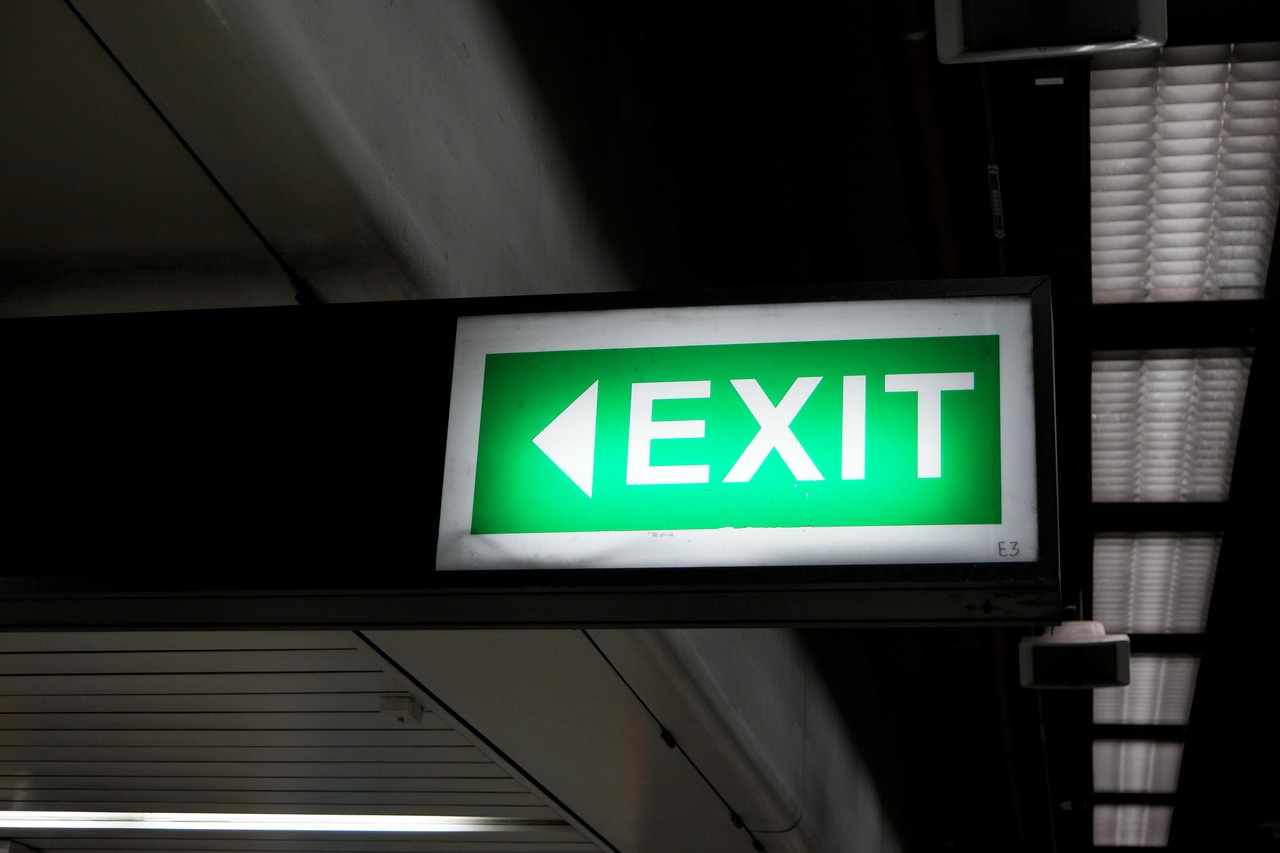
Photo from Pixabay (free license)
Emergency Exit Lighting: The Simple Test Most Buildings Fail — and How to Stay Compliant with NFPA 101
Emergency and exit lighting failures are among the most common fire code violations in the US. NFPA 101 requires monthly 30-second tests and annual 90-minute battery endurance tests, with documentation retained for 4 years. Here is exactly what your building needs to pass inspection.
Key Takeaways
- NFPA 101 requires two types of emergency lighting tests: a monthly 30-second functional test and an annual 90-minute full battery endurance test — both must be documented and retained for at least 4 years.
- Emergency lights must activate within 10 seconds of power failure and provide at least 1 foot-candle of illumination along exit paths for a minimum of 90 minutes.
- Failed emergency lighting is one of the most common fire code violations and one of the easiest to prevent — yet it accounts for a significant portion of inspection failures nationwide.
The Most Overlooked Fire Safety System in Your Building
Ask any fire marshal what the most common violation is during routine inspections, and emergency and exit lighting failures will be near the top of the list. Burned-out bulbs, dead batteries, and missing exit signs are found in buildings of every type — from offices and hotels to schools and hospitals. Unlike fire sprinkler systems and fire alarms, emergency lighting doesn't make noise or spray water. It sits quietly on the wall or ceiling until the power goes out — and that's exactly when it needs to work.
What NFPA 101 Actually Requires
NFPA 101 (Life Safety Code) Section 7.9 sets clear requirements for emergency lighting systems:
Performance Standards
- Activation time: Emergency lights must turn on within 10 seconds of primary power failure
- Illumination level: Minimum 1 foot-candle along exit paths and at floor level
- Duration: Must maintain illumination for at least 90 minutes on battery backup
- Product standard: All units must be listed to ANSI/UL 924
Testing Schedule
| Test Type | Frequency | Duration | What's Checked |
|---|---|---|---|
| Functional Test | Monthly | 30 seconds | Lights activate, lamps work, battery charges |
| Full Duration Test | Annually | 90 minutes | Complete battery endurance under full load |
| Visual Inspection | Monthly | Walk-through | Exit signs illuminated, no damage or obstruction |
According to Fire Testing Solutions, the annual 90-minute test is "significantly more demanding" than the monthly check, requiring the entire emergency lighting system to operate continuously on battery backup alone while technicians verify performance throughout the building.
Common Failures That Get Buildings Cited
The most frequent emergency lighting deficiencies found during inspections include:
- Dead or degraded batteries — the #1 cause of failure. Batteries typically last 3-5 years but degrade faster in hot environments
- Burned-out lamps — LED units last much longer than incandescent, but still need regular checking
- Blocked or obscured exit signs — storage, decorations, or renovations blocking visibility
- Missing documentation — no records of monthly or annual testing. Records must be retained for a minimum of 4 years
- Units not connected to building power — sometimes found unplugged after maintenance or renovation work
Why This Matters More Than You Think
Emergency lighting isn't just a code requirement — it's the system that guides people to safety when everything else fails. During a fire, smoke reduces visibility to near zero. The exit sign above the door and the emergency lights along the corridor are often the only things between an orderly evacuation and a tragedy.
Beyond life safety, failed emergency lighting triggers concrete consequences:
- Fire code violations and fines — as detailed in our article on what happens when a building fails inspection
- Insurance claim disputes — if a fire occurs and emergency lighting wasn't maintained, your claim may be denied
- Delayed occupancy permits — failed inspections can hold up move-ins and renovations
- Personal liability — building owners can be held personally responsible for injuries during evacuations in non-compliant buildings
Making Compliance Easy
- Set a monthly calendar reminder — the 30-second test takes minutes to perform across most buildings
- Schedule the annual 90-minute test with a licensed fire protection company well in advance — get free quotes from providers in your area
- Keep a testing log — digital or paper, retain for at least 4 years for your AHJ
- Replace batteries proactively — don't wait for failure. Replace on the manufacturer's recommended schedule
- Consider self-testing units — newer emergency lights with built-in self-diagnostics can automate monthly testing and alert you to failures
- Check your local requirements — use our Compliance Lookup Tool to verify your jurisdiction's specific emergency lighting standards
Sources
Need fire protection services?
Find licensed companies near you and get free quotes.